Lessons for marketers from MAD//North 2026
As an industry in turmoil goes soul-searching in Manchester, our Head of Strategy distils the key themes for marketers in 2026 and beyond.

It's not the north that's grim...
Things can feel a bit grim in marketing right now. In just the last week, WPP and the newly formed Omnicom-Interpublic Group have made headlines for major restructures, massive job cuts and strategic reviews. Client-side marketers are under huge pressure to grow brands, whilst budgets remain obstinately tight. Everyone’s a little nervous about how and where they fit within a world dominated by AI tools. No one has a clue how the next generation of talent is going to find their way into the industry, where entry-level jobs are few and far between.
So, for an industry looking to do some soul-searching and reassert its role in both business and culture, what better place to look for a path forward than Manchester? A city known for its swagger, whose economy is growing far faster than the rest of the UKs, and which finds itself at the heart of national political discourse.
So, what answers can we learn from the North’s best and brightest marketing minds?
The red thread that linked the talks across both days is that the brands that are winning are those finding the right accommodation between humanity and technology. Those who can blend the creativity, empathy, ingenuity and weirdness of real human brains, what Aardman charmingly describe as 'thumbyness', with the precision, speed and efficiency of the most powerful emerging technologies.
These three examples stood as excellent demonstrations of where marketers should be looking for hope for the future.
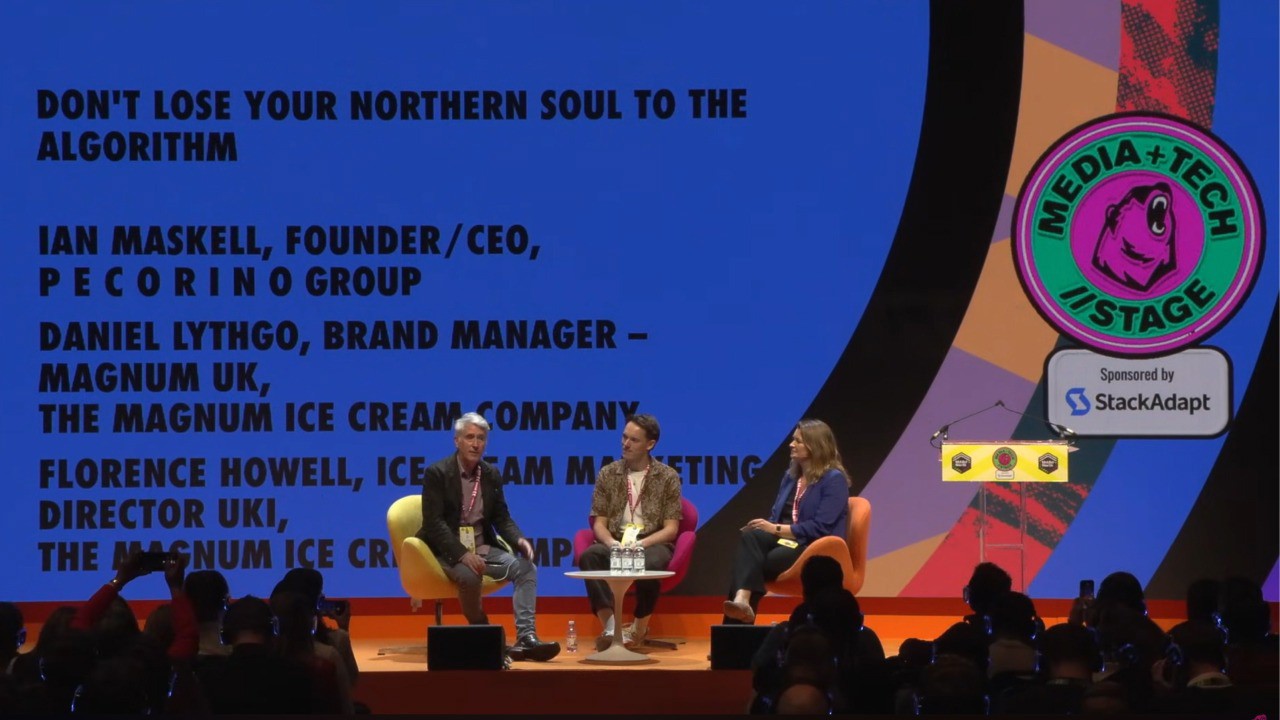
Magnum Ice Cream: Don't Lose Your Northern Soul to the Algorithm
One of the sharpest case studies was from the Magnum Ice Cream company.
They lovingly described the joy of talking to customers in kitchens and freezer aisles to understand how and why they bought ice cream. They explained how they saw themselves as stewards of the brand as it passes from generation to generation, and that their core insight, the crack of the Magnum’s chocolate shell is the most powerful way to convey the product’s distinctive quality, was based on very traditional brand planning principles and customer insights.
They translated their core insight into beautifully shot video, because people notice craft, and because a brand built around the promise of pleasure needs to ooze indulgence, even if it does so with a wink.
Then the execution got properly modern and technical. The campaign translated the crack into a sonic signature and used data-driven media to make the sound show up at the moment it would be most relevant, including placements across podcast and digital radio triggered by proximity to key digital-out-of-home locations, so the “Magnum snap” landed when people were close enough to see the product and act on it.
From Data to Dough: How AI is Transforming Domino’s
Another strong example came from Domino’s, and it was refreshingly un-sexy in the way that most genuinely effective marketing tends to be.
To launch (and grow) a newer chicken range, the team used machine learning to build a propensity model, a way of predicting which customers were most likely to buy chicken next, rather than defaulting to pizza.
The key detail is the constraint they built around it, not simply “who will buy chicken?”, but “who will buy chicken without cannibalising pizza sales?”.
That distinction matters. It turns what could be a purely tactical upsell into a growth driver, increasing average order value and range participation, without just shuffling demand from one menu item to another.
From a customer perspective, the payoff is relevance. Instead of blasting chicken messages to everyone and hoping for the best, the model helps Domino’s tailor comms to the people most receptive to that product, improving the experience by making it feel less like advertising and more like a timely nudge.
And from a marketing operations standpoint, it does what AI is best at: it makes the spend work harder. You reduce wasted impressions, improve efficiency, and free internal teams to focus on the part machines can’t do well, creative ideas, storytelling, and experience.
Danone: Zero-Click World Is Total Search the Key to Your Brand's Discovery?
The practical point wasn’t that people have stopped searching, it’s that the places they search have exploded. Traditional search engines now sit alongside social platforms, marketplaces, communities, and increasingly, AI tools that summarise and recommend without sending anyone to a website. The outcome is the same: more answers are being resolved in-platform, with fewer clicks out to brand sites.
But Danone’s best insight was that while the where is changing, the why isn’t. People still search in moments of intent: to solve a problem, compare options, reduce risk, or get reassurance. If you understand those intent moments (and the friction around them), you can show up with something genuinely useful, regardless of platform.
That’s where the old-school SEO stuff becomes newly relevant. The principles behind E-E-A-T (Experience, Expertise, Authoritativeness, Trust) matter more than ever when platforms, and AI layers on top of them, are trying to decide what’s reliable, what’s safe, and what’s worth surfacing.
And it’s also why communities like Reddit keep surfacing in this conversation. Human opinions, lived experience, and “someone like me” reassurance are becoming increasingly valuable inputs (even if it’s a little scary that the world’s knowledge is being guided by typical Reddit users…).
But this is something we’ve been working towards for a while: thinking holistically about an audience and what they need in a specific moment, moving beyond keywords towards ownership of entire topics across platforms and over time.
Soul-searching
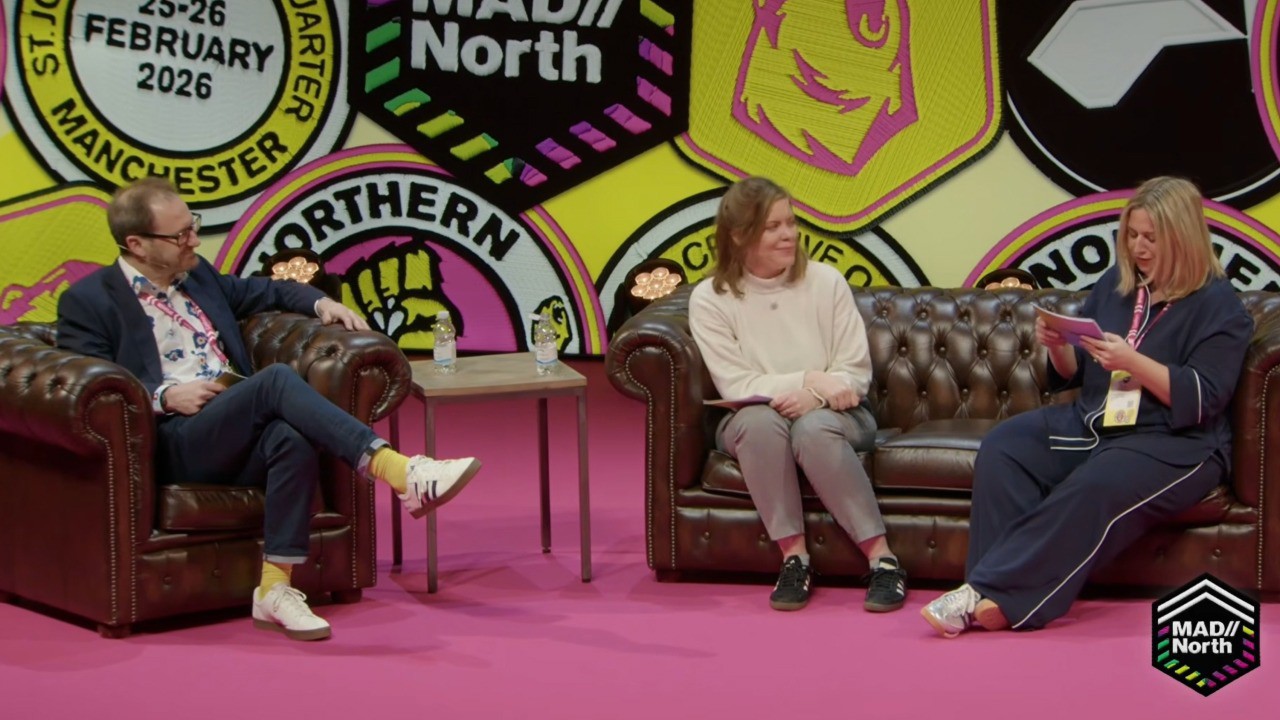
As the indomitable Vicki Maguire highlighted, the best, most potent forms of creativity are born from necessity. And I think that’s what we’re starting to see at MAD//North: an industry with its back against the wall starting to come out swinging.
If there’s a lesson to take away, it’s this: the brands making progress are not choosing between heart and machine. They’re using technology to remove waste, increase precision and make budgets go further, while doubling down on the human parts that still create advantage. Better questions. Better judgement. Better craft. That’s how marketing earns its place in the boardroom again, and keeps its place in culture.
If you'd like to chat about your business challenge, drop us a line over here.